

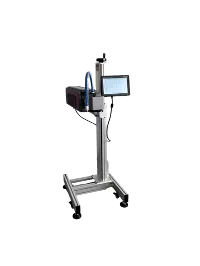
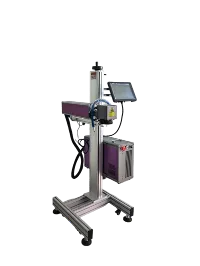
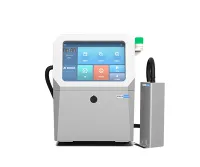
Continuous Inkjet Printer
Suzhou OMA Printing Technology Co., Ltd. was established in 2011. It is a supplier dedicated to industrial inkjet printers, UV inkjet printers, Laser marking machines, and anti-counterfeiting traceability systems. Since its establishment, the company has used advanced domestic and foreign technologies to engage in the R&D and production of inkjet printing and laser marking equipment, providing customers with high-quality product identification solutions.
Why Choose Us
Our Factory
Our factory is located in the beautiful city of Suzhou, covering an area of more than 5,000㎡, equipped with production workshops, maintenance workshops, sample testing workshops, reception centers, etc.
Production Market
From 2011 to date, the cumulative sales volume has exceeded 20,000 units machines, and the annual sales amount in 2023 exceeded 10,000,000 USD. UV inkjet printer sales lead in eastern China and have distributors in many countries.
Product Application
Widely used in hundreds of industries with a demand for marking, such as pipes, profiles, food, beverages, pharmaceuticals, cables, electronics, automobiles, etc
Excellent Team
Our engineer team has more than 30 people, responsible for R&D, production, testing and after-sales.


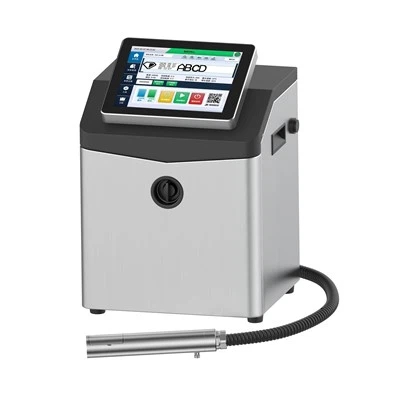


Advantages of Continuous Inkjet Printer
Fast Printing
The continuous inkjet system is centered around creating a pressurized, continuous stream of ink. Continuous inkjet printer machines can print on substrates faster than many other printers can achieve.
Simple Maintenance
Continuous inkjet printer have few moving parts, making repair and maintenance easy, and most common problems are easy to avoid with routine maintenance.
Reliability
The operation and construction of continuous inkjet printers make them resistant to environmental factors that could cause issues for other printers. Continuous inkjet printer don't apply heat to ink, as many other printers do, making them more resistant to higher production temperatures.
Versatile Ink Choices
Continuous inkjet printer are compatible with a wide variety of inks, making them suitable for a large number of porous and non-porous substrates. The contact-free printing method continuous inkjet printer use enables printing on both flat and curved surfaces. As a result, continuous inkjet printer can print on a variety of substrates.

Types of Continuous Inkjet Printer
CIJ Printer 6 Lines With Mixer
2D code:DM; QR error correction mode L、 M、 Q or H
Pattern:LOGO
Information storage:1000 Items
CIJ Printer 6 Lines With Dual Cleaning
Printing speed:Up to 300m/min(5 dots font)
1D code:UPC A&E: EAN 8&13: Code 128A、B&C: UCC/EAN 128; Code 39: I25 code; GS
2D code:DM; QR error correction mode L、 M、 Q or H
CIJ Printer 6 Lines
Nozzie size:Length 258mm, diameter 42mm
Pipe length:3 Meters
Host machine size:325*300*503mm
CIJ Printer 4 Lines With Mixer
Printing speed:Up to 300m/min(5 dots font)
1D code:UPC A&E: EAN 8&13: Code 128A、B&C: UCC/EAN 128; Code 39: I25 code; GS
2D code:DM; QR error correction mode L、 M、 Q or H
CIJ Printer 4 Lines
Protection level:IP65
Nozzie size:Length 258mm, diameter 42mm
Pipe length:3 Meters
Components of Continuous Inkjet Printer
Two Chipped Cartridges: These two bottles supply the fluids that will be used to print on the substrates. One cartridge contains the ink itself, while the other contains solvent or make-up. The “chip” refers to a small printed circuit board installed into each cartridge that enables printer compatibility
Main Reservoir: The two chipped cartridges feed into the main reservoir where they combine into a single printable mixture.
Pressurizing Pump: This pump is positioned next to the main reservoir and pressurizes the ink mixture to feed it toward the printhead.
Decompression Valve: The final element in the controller, the decompression valve makes necessary ink pressure adjustments to the mixture before it arrives at the printhead.
Piezoelectric Element: The piezoelectric element oscillates the ink stream with vibrations to form distinct droplets.
Nozzle: The nozzle propels the droplets toward the substrate.
Charging Electrode Plate: As the droplets are propelled through the nozzle, they are given an electric charge by the electrode plate. The charge enables the droplets to be directed by the deflecting electrode plate.
Deflecting Electrode Plate: This second electrode plate creates a magnetic field that differentiates which droplets should be propelled toward the substrate and which droplets should be rerouted back toward the main tank.
Gutter: The gutter collects the unneeded ink particles and reroutes them back to the tank, ensuring that the ink flow is continuous.
Continuous Inkjet Printer Applications
The packaging industry requires high-speed printing to mark labels, expiry dates, barcodes, and other essential information on various packaging materials. Continuous inkjet printers are the go-to choice for such applications. With their ability to print on almost any surface, including plastic, glass, and metal, these printers ensure clear and durable prints, even in harsh industrial environments.
In the food and beverage industry, where packaging is critical for hygiene and safety, continuous inkjet printers play a crucial role. These printers ensure that all food products and packaging are marked accurately and consistently. Whether it's printing batch numbers, nutritional information, or allergen warnings, continuous inkjet printers guarantee legible and reliable prints, enhancing transparency for consumers.
The pharmaceutical industry demands precise and tamper-evident labeling on medicine packages, bottles, and blister packs. Continuous inkjet printers are highly sought after for their ability to print small, high-resolution codes, serial numbers, and batch information on such packaging materials. The fast-drying inks used by these printers ensure that the prints are smudge-proof, preventing any compromise in readability or interpretation.
In the textile industry, where mass customization and quick turnaround times are essential, continuous inkjet printers provide an effective solution for printing designs, patterns, and logos on fabrics. These sophisticated printers can print on a wide range of textiles, including cotton, silk, polyester, and even synthetic blends. With their precise and fast printing capabilities, continuous inkjet printers enable textile manufacturers to meet the ever-changing demands of the fashion industry.
The automotive industry relies on continuous inkjet printers for marking essential information on various components and parts during production. From engine blocks to tires, these printers provide the necessary identification, traceability, and branding required in the automotive sector. With their ability to withstand extreme temperatures and harsh environments, the printed codes and serial numbers remain intact throughout the life of the product.